

Main Characters
Rudo

- A young orphan boy from a slum of “criminal descendants” who is wrongly accused of murder and thrown into the abyss known as “the Pit”.
- His dual nature: on one hand rage, injustice, and revenge; on the other hand longing, vulnerability and a desire for recognition.
- He is recruited by the “Cleaners”/Actors to fight: monsters born from garbage in a dystopian wasteland.
Enjin

- A Cleaner figure: an experienced “engine” (a power-user) who can manipulate garbage/pollution in some special way.
- Serves as a mentor to Rudo, guiding him and helping him uncover truths about their world.
Themes & Symbolism
Gachiakuta is rich in thematic content and symbolic imagery. Here are some of the major ones:
Rage, Injustice & Identity
- The show foregrounds anger as a motivating force—but also asks what happens when rage is unchecked. “Rudo’s rage is justified, but it’s also questioned.”
- It portrays the marginalized: orphans, slum dwellers, the garbage-dump of society. Being “discarded” becomes symbolic of both literal detritus and social invisibility.
- Identity: Rudo’s background (descendant of criminals, wrongly accused) forces him to grapple with what kind of person he is, and what the system wants him to be.
Garbage / Pollution / The Pit
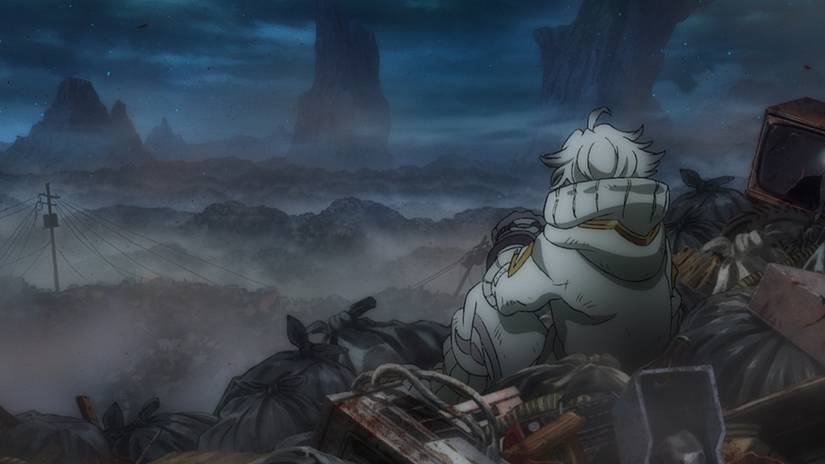

- The “Pit” is a massive garbage dump where life, monsters, “beasts born from garbage” roam.
- Garbage becomes a metaphor: what is thrown away, what is polluted, what society neglects. Characters who emerge from the trash are simultaneously victims and warriors.
- Pollution functions not just environmentally but morally: the world has been allowed to rot, and the result is monstrous.
Hope and Connection Amid Despair
- Even in this harsh world, the series highlights human connection, compassion, the possibility of change. “The story doesn’t ask viewers to suppress their fury, but invites them to examine and learn from it.”
- Characters must not only fight external beasts but also internal ones: guilt, trauma, betrayal, identity loss.
Power and Responsibility
- The “Givers”, the “Cleaners”, the “Engines” all have powers. But power doesn’t solve everything. Gachiakuta shows that power without introspection can become another burden.
- There’s a tension between revenge and justice, between being “used” by the system and using the system to transform one’s condition.
Why This Anime Is Special
Here are the standout reasons Gachiakuta is drawing attention:
1. Emotional Depth and Grit
- Many battle or shōnen-anime showcase fights, power-ups, “feel good” arcs. Gachiakuta instead lets emotional wounds linger. “Loss, anger and hope don’t just vanish after a fight.”
- It is willing to go into very dark and disturbing territory with sincerity—not shock for shock’s sake, but to explore what the broken parts of society feel like.
2. Unique World-Building & Visual Style
- The concept of monsters born from trash, a society segregated into slums and pits, and people fighting to bring meaning back from refuse is conceptually bold.
- Critics describe its first episode as “packed with social commentary, emotional gut-punches, and stunning visuals.”
3. Rage as a Thematic Force
- Many shows treat anger as something to suppress or overcome simplistically. Gachiakuta treats it as real, complex, and deserving of attention.
- Because the protagonist is explicitly in a position of injustice, it gives the rage authenticity and also complexity.
4. Contemporary Resonance
- Themes of environmental decay, societal neglect, the underclass, the “discarded” echo real-world anxieties.
- The symbolism is heavy but grounded, making it more than fantasy spectacle; the world reflects real pain and structures of injustice.
5. Strong Critical & Fan Response
- Already, fans are deeply moved:
“As an incest survivor, this episode brought me to tears…”
“I legitimately never got emotional over fictional characters like I have to them.”
- It’s being positioned as “2025 summer anime’s must-watch” for those wanting more than standard fare.

